Introduction
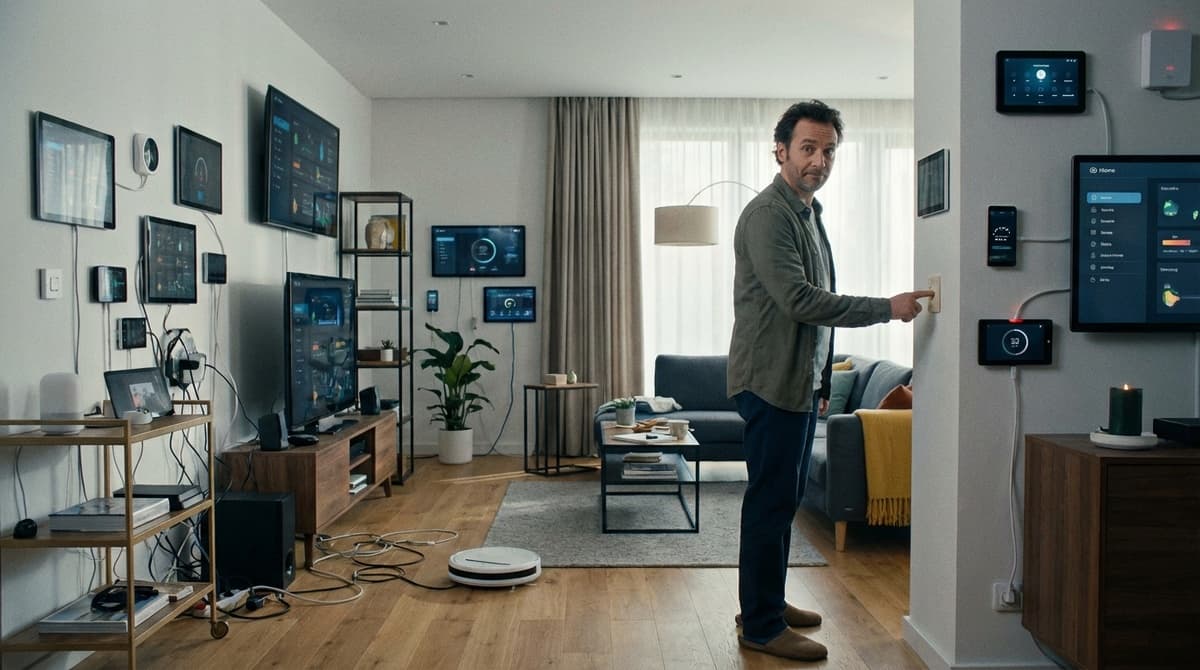
A smart home can work in surprising ways. You can invest money, time, and nerves into it — and still end up doing everything the old way. I've seen this many times and have been through it myself once. Below is a set of bad advice that seems logical, sounds convincing, and is guaranteed to lead to one outcome. The money is spent, but the light switch is still the boss.

Harmful tip 1. Start with flashy features
Voice, color scenes, "smart" shows.
It looks great in presentations but performs poorly in everyday life. The novelty wears off within a week, and basic scenarios never materialize. As a result, you have automation, but nothing to use.
Bad Advice 2. Control Everything Through the App
If nothing works without a phone, the system has already lost.
In the evening, no one wants to open an app just for the light. After a month, such features are either unused or become annoying. The switch wins simply because it's faster.
Bad Advice 3. Make one scenario for everything
Light, climate control, motorised blinds, music simultaneously.
On paper, it's convenient. In reality, the scenario almost never matches real life. You want some things, you don't want others. In the end, the scenario isn't used at all, and you return to manual control.
Harmful tip 4. Automate rare actions
What happens once a month urgently needs automation.

Setup takes hours, benefits are zero. In six months, you won't even remember why you did it. Meanwhile, the system has become more complex and less predictable.
Harmful tip 5. Don't leave manual control
A real smart home should be fully automatic.
In reality, this is a path to frustration. Any system must be able to step back. If you can't simply turn on the light without automation, trust in it vanishes instantly.
Harmful tip 6. Install sensors "by the book"
It also says where to hang it.
The instructions don't know how you live. As a result, the lights turn off when you're sitting and turn on when no one is there. After a month, the sensors are either disabled or you're at war with them.
Harmful tip 7. Roll out the smart home everywhere at once
More is always better.
The system becomes unwieldy, logic gets lost, scenarios start to conflict. Instead of an assistant, you get a set of strange reactions. The quickest way out is to use it the old-fashioned way.

Why does everyone end up walking to the switch anyway
Because the switch is predictable.
It doesn't think, glitch, or require explanations. If a smart home isn't faster and more peaceful than a regular switch, it loses.
Conclusion
The most common mistake in a smart home is starting with technology, not with daily life. As a result, automation exists separately, and life goes on separately.
My conclusion is simple. If after all the investments you still find yourself walking to the switch more often, the system is set up incorrectly. A smart home should eliminate actions, not add new ones.
I share such honest and sometimes painful observations from real life with automation separately, so that the smart home stops being an expensive toy.