Introduction
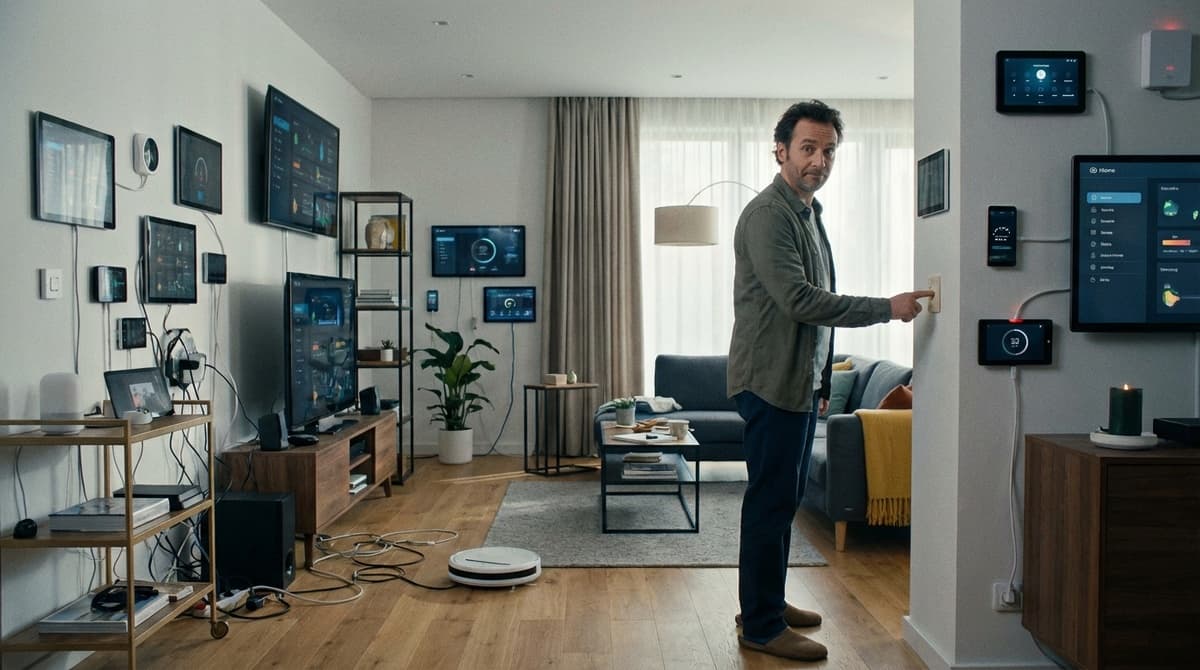
With sensors in a smart home, it's easy to go down the wrong path. People install many, show them off to friends, set up notifications. And then they either turn them off or stop noticing them. I've been through that. Over time, I kept only the sensors that genuinely impact daily life and quietly make the home calmer. Below are five devices that work for me every day and don't cause annoyance.

1. Water Leak Sensor
The most obvious and the most useful.
You don't need it every day. And that's precisely why it works perfectly. While everything is fine, you don't think about it. But when a problem occurs, it saves your renovation, your nerves, and your relationship with your neighbors.
I install it everywhere there's water. Under the sink, by the washing machine, in the bathroom. This isn't a smart home. It's common sense.
2. Motion sensor for passageways
Not motion, but presence.
It detects a person in the area even without hand gestures. The light stays on while you're standing or sitting. It doesn't turn on unnecessarily.
This is the case where automation immediately feels like a convenience, not an experiment.
3. Door opening sensor
It's not for notifications.
Its purpose is to let the house know whether you are inside or outside. Based on this, scenarios are activated and deactivated. Lighting, climate control, home modes.
If a sensor just sends messages, it quickly becomes annoying. If it's part of a logic system, it's forgotten.

4. Smoke sensor integrated into the system
A smoke sensor is something almost everyone has. But most often, it operates independently.
When connected to the system, scenarios become available. The lights turn on. Notifications arrive instantly. You can turn off ventilation or appliances.
This is no longer just a signal. This is the home reacting to a problem.
5. Temperature sensor with hysteresis
The key word here is not temperature, but logic.
A good sensor doesn't trigger climate control over minor fluctuations. It operates within a range. The system reacts rarely, but precisely.
As a result, the home becomes more stable, equipment operates more smoothly, and utility bills decrease. This isn't felt immediately, but becomes very noticeable over time.

Why don't I have the other sensors?
Sensors for data. Sensors for graphs. Sensors for experiments.
If a device doesn't improve an ordinary evening or reduce anxiety, it's unnecessary. I stopped installing anything that requires constant attention or explanations.
Conclusion
Good sensors don't feel like technology. They feel like the absence of problems. If you've forgotten a sensor exists after a month, it was chosen correctly.
My principle is simple. Better five working sensors than fifteen that exist just for show.
I share such practical solutions and honest insights from living with a smart home separately, so that automation remains a helper, not a hobby.